
- Home
- Don Pendleton
Frontier Fury Page 8
Frontier Fury Read online
Page 8
Darkness was Bolan’s friend—but only to a point. Gorshani couldn’t drive without headlights on ancient, potholed roads, unless they wanted to risk damage ranging from flat tires to broken axles. And nocturnal travel in the North-West Frontier Province made them suspect at the best of times. Now, with a dozen soldiers dead and a determined manhunt underway, the less time they spent driving through the night, the better.
“Maybe,” Bolan said, “we ought to turn around. See how your folks are doing with the army first before we split.”
“The mission—”
“We’re not climbing mountains in the dark,” the Executioner said, interrupting the protest. “And camping at the mountain while we wait for sunrise doesn’t strike me as the best idea.”
“If we go back…”
“To have a look, is all,” Bolan said. “Watch and learn.”
“And when the soldiers leave…”
“We’re on our way,” Bolan confirmed. “Still ample time to cover eighty miles and hit the slopes.”
Gorshani seemed to think about it for another quarter mile, then braked the SUV and cranked it through an awkward U-turn in the middle of the narrow road.
COLONEL LAGHARI let the other M113 APC directly follow Mahmood Hasni back toward Sanjrani, while his own vehicle trailed behind. One lesson he had learned from studying the ambush scene was that he did not wish to be in front if there was rocket fire, land mines, or any other deadly obstacles.
There was a chance, however slight, that Hasni had misled him. The excursion to Sanjrani might turn out to be a trap, set by the same men who had massacred the first patrol. So far, Laghari had no inkling as to who the killers were, although the introduction of an English-speaking stranger argued against native bandits or guerrillas.
And there was the parachute, recovered by troops from Mansehra before Laghari arrived to command the investigation. He had believed it to be related to the killings, but Laghari could gather little more than the fact that the parachute was made for jumping, and not for cargo drops. Laghari also now assumed that it had belonged to their unknown English-speaker in Sanjrani.
Assuming that he existed.
Laghari clutched his submachine gun tightly, looking forward to the moment when the killers stood before him. If he found them in Sanjrani, then he would reward the Hasni family for helping him. If they escaped somehow, before his convoy reached the village, then Laghari would demand to know how it had happened.
But if this was some elaborate deception, organized to draw him off the scent—or worse, into a trap—Sanjrani’s peasants would have much to answer for.
Laghari would not leave the village until he had learned the truth, whatever that might be. And anyone who lied to him, or tried to otherwise obstruct him, would have cause to rue the day that he was born.
IT WAS after midnight when the APCs finally rolled into Sanjrani, and fatigue was wearing on Laghari’s nerves. He felt more irritable by the moment, less inclined to hear evasions or excuses. When he thought of Brigadier Bahaar Jadoon, relaxing at his villa in Rawalpindi, it only increased the agitation that he felt.
The APCs entered the village with their searchlights glaring, sweeping over shops and homes, probing the empty streets. Laghari ordered his driver to give the peasants a blast from the siren, knowing that its banshee wail would rouse even the soundest sleeper in Sanjrani. Moments later, when the people started straggling from their homes, Laghari ordered his men to dismount, then followed them into the night.
Laghari spoke Urdu and English—the latter still Pakistan’s official language, despite the passage of six decades since the British occupation forces had departed—but he still required a translator for Pashto. In this case, he was relying on a corporal who’d volunteered to translate for him soon after Laghari had arrived in Peshawar. The man’s name was Malik Tarkani, and he aimed to please.
Surveying glum and sleepy faces in the spotlight’s glare, Laghari estimated that he had two-thirds of Sanjrani’s peasants ranged before him. Others, he supposed, would not come out unless his soldiers went from door-to-door and dragged them from their hovels. For the moment, though, the colonel thought his audience was large enough.
“I want the chief or headman,” he informed Tarkani. “Tell them.”
As Tarkani translated, Laghari watched the faces change. No one seemed groggy now. Those who were not afraid looked angry and resentful at the rude disturbance of their sleep. That did not faze Laghari, since he had not come to win new friends.
The second time his translator repeated the instruction for Sanjrani’s headman to identify himself, an aging character stepped forward, blinking under the harsh lights.
“Do you speak English?” Laghari asked. “Or Urdu?”
The old man nodded.
“Well? Which is it?”
“Some English,” the old man said grudgingly.
“That’s better. And are you in charge of this village?”
Now the old man shrugged. “I give advice, sometimes,” he said. “I have no title, no salary.”
“Is there another who outranks you, then?”
The bearded gnome considered it, then shook his head.
“I cannot hear you!” Laghari snarled.
“No, sir,” the old man replied. If anything, his voice had grown softer.
“In that case,” Laghari said, “you are just the man I want.”
GORSHANI FELT something like panic churning inside him. It was a strange feeling, one he had not experienced since childhood, which increased his pulse rate, made him short of breath and caused a sickly churning in his stomach.
All for what?
The notion of a traitorous informer in Sanjrani sickened him, but he was not tremendously surprised. In any place where hundreds lived together, there would always be a certain fringe of malcontents, dissenters, troublemakers. Still, he’d never thought that any of the villagers he knew would stoop so low as to inform on his, Gorshani’s, family.
Imran Hasni would pay for this night’s work. Gorshani swore that promise to himself, adding the curt proviso, If I remain alive.
The tall American who called himself Matt Cooper—a cover name, no doubt—had never suggested that they act against the soldiers who had to certainly have reached Sanjrani by this time.
“To have a look, is all,” he’d told Gorshani. “Watch and learn.”
But if the soldiers proved too aggressive and violent, what, then? Was Gorshani expected to sit back and watch while his friends, his family, were abused?
“Two miles,” he said, to help distract himself from ugly thoughts.
His passenger did not reply.
A mile from Sanjrani, when the glare of spotlights in the village was a mere bright speck, Gorshani killed the SUV’s headlights and slowed his pace accordingly. He navigated by moonlight and memory, dodging the larger potholes and holding a speed that made the smaller ones manageable.
A half mile from the village, he began looking for a place where he could leave the vehicle. Gorshani recognized the lights and bustle that attended military occupation, and he knew it would be unwise to drive into that killing zone with the American beside him, and their weapons and equipment in the SUV.
“We should walk back from here,” he said, as he turned off the two-lane blacktop onto dirt and gravel. It was an access road of sorts—or would have been if it lead anywhere.
“Suits me,” Bolan told him, as the vehicle slowed to a halt.
Gorshani switched off the dome light before they opened the doors, a small detail that nonetheless he felt proud he’d thought of. Was pride a sin, according to the words of the Koran? Gorshani didn’t think so, but if he was wrong, it had to be one of the lesser sins, entirely separate from murder and adultery.
Murder.
For that one, he would have to trust the Prophet’s intercession with Allah to cleanse his soul.
“They should not see us if we go this way,” he said, already whispering despite their di
stance from Sanjrani. “Watch for snakes.”
“Thanks for the warning,” Bolan said.
The moonlit landscape was completely alien. Although Gorshani had spent many nights with his mother’s kinfolk in Sanjrani, no one from the village ever wandered far across the open land at night. It held too many dangers—asps and vipers, pitfalls, prowling jackals and cutthroats who would kill a man for pocket change or rape a woman first, before she died.
Night within most of the North-West Frontier Province was strictly a time for sleeping, storing up one’s energy to face another grueling day.
“I do not have binoculars,” Gorshani suddenly announced, still whispering.
“I have a pair,” Bolan replied. “Small ones, but adequate.”
Gorshani nodded, relieved that his mistake would not further endanger them. Granted, he had not known they would be creeping around soldiers in the dark, but going off to hunt a group of madmen in the mountains should have prompted him to bring field glasses for surveillance anyway.
Covering the final hundred yards was the worst for Gorshani. He imagined that each slip and scrape of his feet on dry soil had to be audible in the village, forewarning the soldiers of his approach. Would they be waiting for him, with their weapons leveled, when he came into range?
Again, as if reading his mind, Bolan said, “They can’t hear us. Not yet.”
I hope not, Gorshani thought, as he crept up to the outskirts of Sanjrani, looking for a place to hide.
“THERE ARE NO strangers here,” Sanjrani’s headman told Colonel Laghari.
He was called Aban Gardezi, and the colonel did not trust a word he said.
“No strangers,” Laghari said.
“None, sir.”
“Would it then surprise you, if I said that someone in this village summoned us because you had two strangers hiding here, both armed, suspected of involvement in mass murder?”
“Yes, sir.”
“Yes, what?”
“Yes, it would surprise me, sir.”
“You know a man named Imran Hasni, of this village?” Laghari asked.
“I know everyone who lives here, sir.”
“I’m asking about Imran Hasni, now.”
“I know him, sir.” Was that a flicker of disgust on Gardezi’s face?
“Is he among the people standing with us here?”
The headman made a show of slowly turning, studying the faces that surrounded him, rising on tiptoe from time to time to examine faces in the rear of the assembled crowd.
At last, he turned to face Laghari once again and said, “I do not see him, sir.”
“Is he a heavy sleeper?”
“How would I know, sir?”
“Produce him. Bring him here to me at once.”
“Sir, I cannot invade another’s home.”
Laghari frowned, a thoughtful look, then said, “You’re right. That’s my job. Lead these soldiers to his house immediately. You, and you! You, too!” he barked at three privates. “Go with this man and bring Imran Hasni before me.”
Without their headman present, Sanjrani’s residents began to stir and mutter. They were more frightened than angry at the moment. Laghari was not worried. Each of his M113 had a .50-caliber machine gun trained on the crowd, capable of pouring out 600 rounds per minute.
At the first sign of a hostile movement from the crowd, Laghari simply had to shout one word, and all who stood before him would be shredded by a storm of armor-piercing bullets. Sanjrani would cease to exist as a viable community.
Colonel Laghari was still smiling at that mental image when his soldiers returned. One shoved Gardezi before him, while the other two half carried a body between them, its feet dragging limp on the ground.
They dropped the corpse in front of Laghari, one private reaching down to roll the dead man over, on his back. Beneath the spotlight’s glare, Laghari saw the open throat, the shirt soaked through with crimson, showing other stab wounds lower down.
“Is this Imran Hasni?” Laghari asked the village headman.
“It appears so, sir.”
“Is it, or is it not?” Laghari shouted in the old man’s face.
Unflinching, he replied, “It is, sir.”
“Can you tell me who killed him?” Laghari asked.
“No, sir,” Gardezi answered. “I saw nothing.”
“And I suppose the others saw that same nothing?”
The headman shrugged. “I speak for no one but myself, sir.”
“On the contrary,” Laghari said. “You represent the village.”
“Not in this, sir.”
“Well, then, can you guess who might have done this thing? Who hated him enough to gut him like a sheep at slaughter?”
“No, sir.”
“But you agree that someone must know something.”
“Who can say, sir?”
“You leave me no choice,” the colonel said. “I am compelled, now, to interrogate each person in this village, man and woman, old and young. No one shall rest until the truth is known to me.”
“As you command, sir.”
Addressing the soldier who had led the three-man party to the dead man’s home, Laghari asked, “Who else was in the house?”
“No one, sir.”
Turning back to Gardezi, he said, “I know this Hasni had a son. Is there a wife, as well? More children?”
“He does, sir,” the headman replied.
“So, where are they?” Laghari demanded.
“I have no idea, sir.”
“Indeed? Then it appears that I must help you run your village,” the colonel said. Turning to his soldiers, Laghari made a sweeping gesture with one arm, shouting, “You lot! And you, there! I want ten two-man teams. Search the village, house by house. Bring any stragglers forward, and subdue those who resist. I will resume interrogation when I have Imran Hasni’s wife and children before me. Now, go!”
His men broke ranks, formed pairs and pushed off through the crowd. Laghari kept his place between the APCs, covered by twin machine guns, flanked by his lieutenant and the APC drivers, all armed with rifles. His submachine gun’s weight felt reassuring in his hands.
He would have answers soon. Answers about the strangers who were either hidden in Sanjrani or had passed this way, and answers about the murder of Imran Hasni. If Hasni’s wife and other children had been slain, as well, Laghari thought he might as well arrest the whole damned village for complicity in murder, let the courts and lawyers sort it out.
But he would have his answers.
Soon.
7
Bolan knew Sanjrani’s headman was in trouble as soon as he’d seen the blood-smeared corpse. His Steiner 7x50 Commander III binoculars revealed the scene in stark relief, almost as if he stood right beside the Pakistani officer who stared down at the body.
Bolan passed the glasses to Gorshani, saying, “That must be your squealer.”
Bolan’s guide surveyed the scene, frowning, and handed back the glasses. “Imran Hasni,” he said. “They should have waited.”
Or have been quicker to remove the body, Bolan thought.
It was a hard call, either way. Letting the turncoat live, with soldiers on the way, risked having him do even more damage than he’d already done. Slitting his throat, without disposing of the evidence, left someone—maybe the whole village—subject to a murder prosecution under Pakistani law, which ranked among the world’s most controversial legal systems.
Downrange, the officer in charge was pacing back and forth in front of his captive audience, nearly stepping on the corpse of Imran Hasni as he waved his arms, haranguing the villagers. He seemed to be making a speech of some kind, though Bolan couldn’t hear or translate what he said.
“I need to get down there,” he told Gorshani. “If it falls apart, I want to be closer. You coming?”
“Yes,” his driver said without a heartbeat’s hesitation.
Bolan had no plan in mind as he began his scuttling advance under cov
er of darkness. Spotlights mounted on the APCs blinded the villagers who might have seen him and Gorshani coming otherwise, while all the soldiers faced inward, their weapons covering the crowd. The officer’s raised voice and the idling engines of his vehicles covered whatever sounds the two advancing shadow warriors made.
The very last thing Bolan wanted was another clash with Pakistani troops, burning up time and ammunition, leaving bodies in his wake, and risking death before he even reached his mission’s destination. He wouldn’t intervene in any kind of orderly arrest, but if it went the other way…
One problem flashing through his mind arose from simple math. He knew the M113 APCs seated two crewmen and eleven passengers apiece. His head count of the soldiers present told him that the vehicles were full, meaning that they could take a maximum of one or two prisoners each, packed in like sardines, if they sat on the floor near each APC’s rear exit hatch.
For any larger roundup, the officer in charge would have to phone or radio for trucks to haul the prisoners away. That meant a wait of several hours, while the convoy formed in Peshawar and wound its way to Sanjrani. It would be dawn before the reinforcements got there, even if they started getting organized immediately.
Bolan couldn’t afford to watch and wait that long—nor, from the sound of his ongoing tirade, was the Pakistani officer a fellow long on patience. Anything he planned to do would happen soon, in Bolan’s estimation, and it didn’t sound like he was in a mood for legal niceties.
Suddenly the officer stopped short before the village headman, bellowing a question at him. When the chief made his inaudible reply, the officer lashed out with force enough to break the old man’s nose and knock him off his feet.
“Not yet,” Bolan gritted to Gorshani at his side.
It might end there, with an arrest, if they were lucky.
Bolan might have actually crossed his fingers if his hands weren’t wrapped around the pistol grips of his assault rifle and its grenade launcher, with index fingers curled around their triggers.
Ready for some fool to ring the doorbell at the gates of hell.
 Wild Card
 Warrior's Edge
 Blood Vortex
 Lethal Vengeance
 Killing Kings
 Cold Fury
 Righteous Fear
 Cyberthreat
 Stealth Assassin
 Critical Exposure
 Miami Massacre te-4
 Terrible Tuesday
 Dying Art
 Jungle Hunt
 Sicilian Slaughter
 Throw Down
 Miami Massacre
 Sudden Death
 Panic in Philly
 Savage Fire
 Nightmare in New York te-7
 Omega Cult
 Sabotage
 Viral Siege
 War Tactic
 Thunder Down Under
 Haitian Hit
 The Hostaged Island at-2
 Fireburst
 The Killing Urge
 Assault
 Ashes To Ashes: Ashton Ford, Psychic Detective
 Flight 741
 Eternal Triangle
 Frontier Fury
 Meltdown te-97
 Chicago Wipeout
 Command Strike
 Nightmare Army
 Ivory Wave
 Combat Machines
 Silent Threat
 Resurrection Day
 Perilous Cargo
 Syrian Rescue
 Arizona Ambush te-31
 Siege
Siege Line of Honor
 Lethal Risk
 Blood Testament te-100
 Soviet Specter
 Arizona Ambush
 Fatal Prescription
 Deep Recon
 Border Sweep
 Life to Life
 Ballistic
 Hellbinder
 Time to Time: Ashton Ford, Psychic Detective (Ashton Ford Series Book 6)
 The Violent Streets te-41
 The Libya Connection te-48
 Cartel Clash
 Whipsaw te-144
 Blood Rites
 Triangle of Terror
 Betrayed
 San Diego Siege
 Death Minus Zero
 Arctic Kill
 Mind to Mind: Ashton Ford, Psychic Detective
 Blood Heat Zero te-90
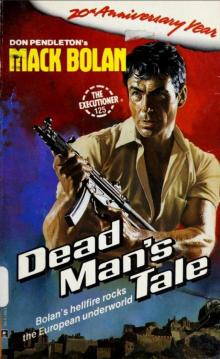 Dead Man's Tale
 Sunscream te-85
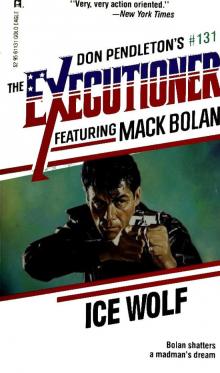 Ice Wolf
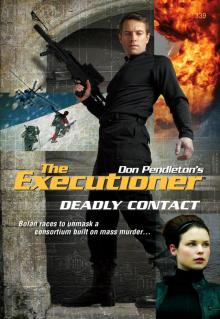 Deadly Contact
 The Cartel Hit
 Tower of Terror at-1
 Conflict Zone
 Patriot Strike
 Point Blank
 Rogue Force
 Patriot Play
 Cold Judgment
 Contagion Option
 Sicilian Slaughter te-16
 Dragon Key
 Terminal Velocity
 Vegas Vendetta
 Ashes To Ashes
 Blood of the Lion
 Ballistic Force
 Desperate Cargo
 Detroit Deathwatch te-19
 Nightmare in New York
 Killpath
 Executioner 056 - Island Deathtrap
 Battle Cry
 Don Pendleton - Civil War II
 Copp In The Dark, A Joe Copp Thriller (Joe Copp Private Eye Series)
 China Crisis (Stony Man)
 Code of Dishonor
 Firebase Seattle
 Hard Targets
 Domination Bid
 Kill Squad
 Slayground
 Poison Justice
 Suicide Highway
 Copp In Deep, A Joe Copp Thriller (Joe Copp Private Eye Series)
 Prairie Fire
 Ninja Assault
 Death Metal
 Blood Run
 Doomsday Disciples te-49
 Breakout
 Caribbean Kill te-10
 Fire Eaters
 Hawaiian Hellground
 Baltimore Trackdown te-88
 Threat Factor
 Don Pendleton's Science Fiction Collection, 3 Books Box Set, (The Guns of Terra 10; The Godmakers; The Olympians)
 Satan’s Sabbath
 Assault on Soho te-6
 Copp In Shock, A Joe Copp Thriller (Joe Copp Private Eye Series)
 California Hit te-11
 Chicago Wipe-Out te-8
 Copp For Hire, A Joe Copp Thriller (Joe Copp Private Eye Series)
 Point Position
 Friday’s Feast
 Exit Code
 Night's Reckoning
 New Orleans Knockout
 Washington I.O.U.
 California Hit
 Blood Vendetta
 Day of Mourning te-62
 Lethal Payload
 Boston Blitz
 Knockdown
 Blood Sport te-46
 Council of Kings te-79
 Terrorist Dispatch (Executioner)
 Silent Running
 Death Squad
 Deadly Salvage
 Oceans of Fire
 Teheran Wipeout
 Border Offensive
 Devil's Horn
 Death Run
 Continental Contract
 Savage Deadlock
 Eye to Eye: Ashton Ford, Psychic Detective
 Revolution Device
 Heart to Heart: Ashton Ford, Psychic Detective
 Apocalypse Ark
 Texas Storm
 Maximum Chaos
 Sensor Sweep
 Colorado Kill-Zone
 San Diego Siege te-14
 Tennessee Smash
 Desert Impact
 Fire in the Sky
 Wednesday’s Wrath
 Super Bolan - 001 - Stony Man Doctrine
 Chain Reaction
 Pacific Creed
 Death List
 Rebel Force
 Savannah Swingsaw te-74
 Heart to Heart
 Shadow Search
 Thermal Thursday
 Battle Mask te-3
 Rogue Assault
 Blind Justice
 Cold Fusion
 Nigeria Meltdown
 Backlash
 Moscow Massacre
 St. Louis Showdown
 Anvil of Hell
 Life to Life: Ashton Ford, Psychic Detective
 Amazon Impunity
 Run to Ground te-106
 Save the Children te-94
 Detroit Deathwatch
 Shadow Hunt
 Terror Ballot
 Stand Down
 Dixie Convoy
 Vendetta in Venice
 War Against the Mafia
 Assassin's Tripwire
 Appointment in Kabul te-73
 The Chameleon Factor
 Pirate Offensive
 Prison Code
 Firebase Seattle te-21
 Ground Zero
 Assassin's Code
 Perilous Skies (Stony Man)
 Toxic Terrain
 Canadian Crisis
 Executioner 057 - Flesh Wounds
 Uncut Terror
 War Everlasting (Superbolan)
 Nuclear Reaction
 Capital Offensive (Stony Man)
 Beirut Payback te-67
 Monday’s Mob
 Blood Dues te-71
 Dead Easy
 Texas Showdown at-3
 Sold for Slaughter
 Orbiting Omega
 Copp On Ice, A Joe Copp Thriller (Joe Copp Private Eye Series)
 Rebel Blast
 Blowout
 Killing Trade
 Assault on Soho
 Season of Slaughter
 Collision Course
 Shock Waves
 Continental Contract te-5
 Dead Reckoning
 Enemies Within
 Agent of Peril
 Death Has a Name
 Vegas Vendetta te-9
 The Fiery Cross
 Cleveland Pipeline
 Armed Response
 Mercy Mission
 Tiger War te-61
 Renegade Agent te-47
 Damage Radius
 Eye to Eye
 Acapulco Rampage
 Skysweeper
 The Iranian Hit te-42
 Death Gamble
 Rebel Trade
 Predator Paradise
 Battle Mask
 Pulse Point
 Missouri Deathwatch
 Blood Tide
 Missile Intercept
 Jersey Guns
 Hostile Force
 The Bone Yard te-75
 Twisted Path te-121
 Mind to Mind
 Copp On Fire, A Joe Copp Thriller (Joe Copp, Private Eye Series)