
- Home
- Don Pendleton
Battle Cry Page 4
Battle Cry Read online
Page 4
He landed in a crouch and rolled once, bouncing to his feet as he came out of it. He sprinted for the sidewalk on a long diagonal, trying to gain ground in the general direction of his rental car while he had a chance. Hurdling a low fence meant to keep trespassers off the grass, he hit the sidewalk running, as a low-slung car roared up and swung in to the curb.
His piece was up and tracking toward the driver’s face and locked there, as the woman at the wheel asked him, “Care for a lift?”
Chapter 3
Washington, D.C., two days earlier
Parking was easier in Washington the farther you got from the White House. Not easy, but easier, as in, you only had to drive around the block four or five times for a space with marginal security.
Bolan motored north on Sixteenth Street, leaving the monuments and barricades behind, letting the flow of morning traffic carry him along. Most people who had jobs would be at work by this time. But Washington was not only the capital of paper shuffling, but also of people on the move: between office blocks, en route to courthouses and libraries; filing writs and motions; carrying messages that couldn’t be trusted to phones or encrypted e-mails.
The soldier avoided Washington—or Wonderland, as he had learned to think of it during his long and lonely war against the Mafia—whenever possible. He had no business there, per se, since he did not officially exist. His death in New York City was a matter of public record, literally carved in stone.
How often did a soldier get to visit his own grave?
Still, Hal Brognola worked in Washington, at the Justice Department’s headquarters on Pennsylvania Avenue. There were times he couldn’t get away to Stony Man Farm in Virginia for a face-to-face with Bolan, and on those occasions the Executioner used his knowledge of the teeming city’s streets to good advantage.
On this day, they were meeting at a new spot: the Supreme Council of the Scottish Rite of Freemasonry, in the 1700 block of 16th Street, Northwest. Bolan wasn’t a member of the lodge, and he had never seen Brognola sporting a Masonic ring, but he assumed that the big Fed had chosen the location for a reason that would soon become apparent.
Meanwhile, Bolan had done his homework online. He knew that the Scottish Rite branch of Freemasonry had been founded in Charleston, South Carolina, in 1801. Its best-known promoter and primary architect of lodge ritual was Albert Pike, a Boston native who moved south and later wound up fighting as a Confederate brigadier general in the Civil War. Some conspiracy theorists named Pike as a founder of the original Ku Klux Klan, but most historians dismissed that claim as false.
Beyond that, Bolan knew the lodge had thirty-three “degrees” of membership, with titles advancing from “master traveler” to “inspector general” at the pyramid’s apex. Much of the lodge’s dogma was cloaked in secrecy, but its public face included extensive work on behalf of dyslexic children and maintenance of two first-rate pediatric hospitals, in Dallas and Atlanta.
Bolan reached his destination—an imposing edifice known as the House of the Temple—and motored past in search of available parking. He found it two blocks farther north, pulled his ticket out of a machine and walked back in the warm sunshine.
He already knew that the House of the Temple was open for tours between 10:00 a.m. and 4:00 p.m., September through February.
Bolan had a jump on some of the other tourists approaching the House of the Temple that morning. He’d already taken a “virtual tour” of the complex, and so knew what to expect. Steps rising in groups of three, five, seven and nine brought him to the main entrance: a bronze door flanked by two limestone sphinxes and thirty-three columns, each thirty-three feet tall. The sphinx to the right of the door had its eyes half-open, symbolizing wisdom, while its partner was wide-eyed, representing power.
The soldier entered through the tall polished doors, passing into an atrium that served as the central court of the temple. He had exact change ready for the ticket, palmed it and scanned the spacious chamber with its marble floor and benches, eight huge Doric columns carved from granite and bronze plaques on the walls displaying various Masonic symbols. Overhead, bronze chandeliers with alabaster bowls provided light.
Bolan drifted toward the central feature of the atrium, a table wrought from Italian marble, supported by double-headed eagles that served as the lodge’s insignia. From the temple’s website, he knew that the Latin inscription—Salve Frater—translated into English as “Welcome Brother.”
Bolan had nearly reached the table when a gruff, familiar voice behind him said, “You’re right on time.”
HAL BROGNOLA LOOKED the same as always, stylish in a rumpled sort of way, frowning a little, as if carrying a load of worry on his shoulders. Which, on any given day, he was.
Each time they met, Bolan wondered about the secrets locked inside Brognola’s head: the threats that he’d been called upon to deal with, orders he had issued in response, the missions he’d directed that would place good men and women in harm’s way. They only talked about the jobs he had for Bolan, but the story didn’t end there. Never had, and never would, as long as Brognola stayed at his post.
“I aim for punctuality,” Bolan replied to the big Fed’s remark.
“And always were a marksman.” As they shook hands, Brognola said, “I suppose you’re wondering about this place.”
“I did some research on the internet,” Bolan said. “Nothing too mysterious, except your choice of meeting places.”
“I was going for a theme,” he said. “Let’s walk.”
They passed a pair of Egyptian-style statues inscribed with hieroglyphs. From his virtual tour, Bolan knew they were carved out of marble quarried at Lake Champlain, New York. The inscriptions referred to wise men and the glory of God.
“It’s not about the Masons,” Brognola advised him.
“I didn’t think it was.”
“But I was in a Scottish state of mind.”
“Okay.” He waited for Brognola to spill it in his own good time.
They left the atrium behind, to enter the temple’s executive chamber. The grand commander’s throne sat facing the doorway, under a plush canopy, while thirty-three empty chairs awaited members of the supreme council. A gold-inlaid ceiling topped heavy plaster walls with intricate accents of black leaves and vines, with dark walnut woodwork throughout.
“You heard about the incident last week in Glasgow?” Brognola inquired.
“The basics,” Bolan said. “Ground breaking for a factory. Somebody shot it up and killed the CEO, along with others.”
“Which includes an unarmed cop,” Brognola said. “Long story short, the shooters got away, but they claimed credit.”
“Oh?”
“That only made the local news, maybe a blurb in London. Nothing to compete with talk-show crap and Jersey-liquor nonsense over here.”
“Who pulled it off?” Bolan asked.
“It’s a homegrown outfit called the Tartan Independence Front,” Brognola said. “Some kind of spin-off from the Tartan Army, if you still remember them.”
“It rings a bell,” Bolan replied.
One corner of Brognola’s mouth twitched with the bare suggestion of a smile. “Word is, they didn’t want to sound like copycats, so when they started up, they called their gang the Scottish Independence Front. But changed it pretty quickly, when they got wind of the reaction to their tagged initials.”
“SIF?” Bolan said. “I imagine so.”
“What self-respecting revolutionary wants to be confused with a disease?” Brognola asked.
Climbing marble stairs to reach the temple’s banquet hall, they reached the middle landing and paused to admire the Pillars of Charity alcove, a “light well” of stained glass framed by bronze. The pillars themselves were jet-black and polished to a mirror shine.
“So, you’ve got Scotsmen mad at England,” Bolan said. “What else is new?”
“This isn’t Braveheart or Rob Roy,” Brognola said. “Try Baader-Meinhof in a kilt and tam-o’-shanter.”
Bolan almost laughed aloud at that, but caught himself in time. “Okay,” he said. “It sounds like something for SO15.”
Meaning the former Special Branch of Scotland Yard, which had merged with the Metropolitan Police Anti-Terrorist Branch in 2006, to create a new Counter Terrorism Command. The “SO” stood for Special Operations. Where they got the “15” would be anybody’s guess, Bolan thought.
“It would be,” Brognola replied, “but we’ve got pressure over here because the latest victim was American.”
“One of the victims,” Bolan said.
“You’re right. But he was rich and influential, with at least a dozen friends in Congress, one of them a senator.”
“All squeaky wheels,” Bolan said.
“And yours truly is expected to supply the grease,” he said.
“Won’t the locals be all over it?” Bolan asked.
“Locals, officials from London, they may even call in some talent from MI5 and the SIS.”
Britain’s Security Service and Secret Intelligence Service.
“Sounds like I’d have more badges on my hands than terrorists,” Bolan observed.
“You’d have to watch your step,” Brognola said, “but I think it’s doable.”
“Why don’t you drop the other shoe,” Bolan suggested.
“Damn. Was I that obvious?”
“If this was just about a CEO and pacifying congressmen, Justice would send an FBI team out to help the Brits.”
“They’re doing that,” Brognola said.
“More badges. Great. Let’s hear the rest.”
They’d reached the temple’s library, billed as the oldest open to the public in D.C. There were a quarter of a million books on hand, including some printed by Benjamin Franklin a decade before the American Revolution.
“The TIF is marginal,” Brognola said. “Maybe a thousand members total. But they’re getting cash and arms from somewhere, out of all proportion to their size and overall importance in the scheme of things.”
“What are you thinking? Eastern Europe? China?”
“Possibly,” Brognola answered. “But it feels closer to home. The guns aren’t hard to find. The cash…that’s something else.”
“So, I’d be looking for the source.”
Brognola took a CD from an inside pocket of his tailored coat and handed it to Bolan.
“Have a look at this,” he said, “and tell me when you’re good to go.”
BOLAN CHECKED into a Days Inn on the Clara Barton Parkway, near Glen Echo Park in Maryland. He took a single room, no frills, and didn’t bother to unpack. Set up his laptop on the rooms lone table, by a window facing the parking lot, and slipped Brognola’s disk into the CD drive. He opened its single file, then cracked a soda from the minibar and settled down to read.
The Tartan Independence Front had organized five years earlier, based on the information gleaned by Scotland Yard from interviews, wiretaps and other sources. Its founders were admirers—some said ex-members—of the old Tartan Army, a group supporting Scottish independence from the UK that had carried out a string of bombings and other terrorist acts from the early 1970s until a mass roundup and trial of identified members twenty years later. Despite their best efforts, they’d never come close to rivaling the IRA.
But it seemed that someone was ready to try again.
The TIF’s supposed leader was Fergus Gibson, an Edinburgh native born in 1976, whose father had been implicated in—but never charged with—one of the Tartan Army’s bombings in Manchester, England. Examining his face in photographs, Bolan supposed that maybe rebellion ran in the blood. There was a set to Gibson’s jaw, a frown that seemed to be perpetual. Or was it simply that surveillance photos had been snapped when he was in a dour mood?
Gibson had finished three semesters at Edinburgh Napier University before dropping out, without explanation, at age twenty. While it lasted, he’d majored in engineering. His employment record showed stints as a trucker, construction worker and operator of heavy equipment. As far as anyone could tell, he’d never voted in his life, and never voiced any political opinions prior to cofounding the TIF with the guy who reportedly served as his second in command.
Graham Wallace was a year older than Gibson, but there was no indication that he’d ever tried to run the show. A Highlander from Inverness, he’d never been to college but had gone the hard-knocks route, including multiple encounters with the justice system. Five arrests were on record, two of which resulted in convictions. Wallace had served nine months at HM Prison Aberdeen for assaulting a policeman, followed by two-and-a-half years at HM Prison Barlinnie for second-degree arson. The target in that case had been a police car. Intoxication and a psych exam had dropped the charge from first degree.
Since its inception, the TIF had been linked to bombings in Glasgow, Edinburgh, Abderdeen, Dundee and Inverness. Each blast—and two bombs that failed to explode, in Aberfoyle and Lockerbie—had targeted shops or factories owned by English investors. Recently, suspected TIF bombers had left their home turf to detonate charges in Manchester, Leeds, York and London. None of the attacks had claimed a life.
Until Glasgow.
The TIF—if it had done the Lockhart job, which Bolan had no cause to doubt—was stepping up its game. Warnings were out; bloodshed was in. And if Brognola was correct, which normally turned out to be the case, the new aggressive attitude was being fueled by fresh infusions of cash, source unknown.
There’d been a time when Bolan would have looked to Moscow first, but Russia was a mess these days, nearly bankrupt, ruled by a decadent kleptocracy that was too busy stealing to foment some crackpot revolution in the West. The Russians might sell guns to Gibson and his crew, but the days of free hardware and lavish donations to leftist guerrillas were gone.
Who else was in the business of supporting terrorism? China focused mainly on the Far East, and was having trouble with its homegrown dissidents, as well as agitation over the long-running occupation of Tibet. Cuban agents kept their hands in with Latin American activists and some outposts in Africa, but Europe had proved to be sterile ground for Castro-style radicalism.
That left the Middle East, but terror’s financiers in that region generally confined their support to Islamic extremists, or at least to die-hard enemies of Israel. Iran, Syria and Saudi Arabia had no more in common with the TIF than with the IRA in Belfast or the Ku Klux Klan in the United States.
Call it a mystery. It wouldn’t be the first Bolan had cracked by application of strategic pressure. And, with any luck, it wouldn’t be the last.
With the critical information committed to memory, Bolan hit the CD’s drop-down menu and ordered his laptop to Erase This Disk. It took about a minute, then he double-checked, extracted the CD, snapped it in two and dropped it in the small trash can beside him.
Done.
Bolan booked his flight from JFK to Glasgow International online, showered, set his alarm for 6:00 a.m. and went to sleep.
AFTER AN EARLY breakfast at the motel’s coffee shop, Bolan drove north from Washington to Newark, New Jersey, arriving just after 10:30 a.m., with six hours left before check-in at JFK.
By 11:15 a.m., Bolan was crossing the Goethals Bridge to pick up the Staten Island Expressway, making good time heading toward Brooklyn where he’d drop the rental car.
Ace Storage stood on Flatbush Avenue, between Marine Park and Floyd Bennett Field. A cyclone fence topped with razor wire surrounded ten ranks of fifty storage units each, which rented by the month or year. Bolan’s was number 319, secured with a combination lock that packed a two-gram high-exp
losive wallop if you failed to get the numbers lined up properly in two attempts.
Bolan had similar facilities across the country in various places. Each held weapons, ammunition and assorted other items that might be of use to him in an emergency. The rental fees were paid by credit card, through Stony Man, on active accounts maintained under half a dozen false names. Each straw man had a Grade-A credit rating. None appeared in any law-enforcement registry or other database maintained by state or federal government. Their addresses were local mail drops, but the bills were paid online. If anybody stole one of the bills and tried to scam the card’s owner—which hadn’t happened yet—the consequences would be suitably severe.
Bolan spent fifteen minutes in his storage unit on the early afternoon of his departure from the States. He left behind one of his four Beretta 93-R pistols, with its shoulder harness, and an MP-5 K submachine gun that he’d kept beneath the hired car’s shotgun seat. Also abandoned for the moment was a Gerber automatic knife with four-inch tanto blade, serrated over half its cutting edge—a modern switchblade, in effect.
Opening a compact fireproof safe, Bolan removed a passport, California driver’s license, credit cards and other basic ID matching the “Matthew Cooper” name on his flight reservation. Name and address aside, the items were legitimate, concocted from originals secured through Brognola’s Stony Man team. The phone number displayed on Cooper’s driver’s license would ring through a relay in Los Angeles, to a voice-mail system at Stony Man Farm, in Virginia. Bolan, as Cooper, could check his messages from anywhere on Earth, but didn’t have to answer.
After all, he was on vacation.
It was a short drive from Ace Storage to JFK International Airport via Shore Parkway and the Nassau Expressway. He dropped his rental car at 1:05 p.m., ate an overpriced lunch in Terminal 4, and took his time checking in for his 6:30 p.m. flight. Security was slow, as always, with the standard questions, pat downs, and inspections of a thousand shoes.
 Wild Card
 Warrior's Edge
 Blood Vortex
 Lethal Vengeance
 Killing Kings
 Cold Fury
 Righteous Fear
 Cyberthreat
 Stealth Assassin
 Critical Exposure
 Miami Massacre te-4
 Terrible Tuesday
 Dying Art
 Jungle Hunt
 Sicilian Slaughter
 Throw Down
 Miami Massacre
 Sudden Death
 Panic in Philly
 Savage Fire
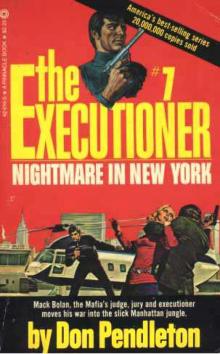 Nightmare in New York te-7
 Omega Cult
 Sabotage
 Viral Siege
 War Tactic
 Thunder Down Under
 Haitian Hit
 The Hostaged Island at-2
 Fireburst
 The Killing Urge
 Assault
 Ashes To Ashes: Ashton Ford, Psychic Detective
 Flight 741
 Eternal Triangle
 Frontier Fury
 Meltdown te-97
 Chicago Wipeout
 Command Strike
 Nightmare Army
 Ivory Wave
 Combat Machines
 Silent Threat
 Resurrection Day
 Perilous Cargo
 Syrian Rescue
 Arizona Ambush te-31
 Siege
Siege Line of Honor
 Lethal Risk
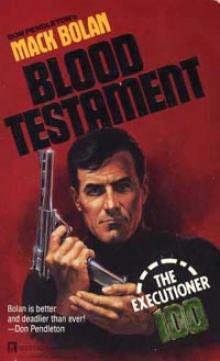 Blood Testament te-100
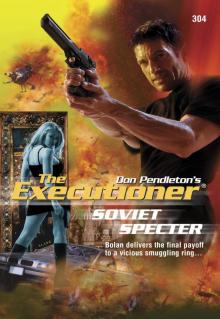 Soviet Specter
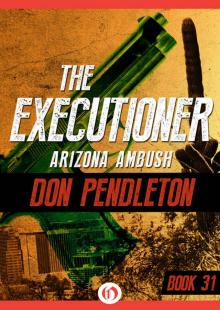 Arizona Ambush
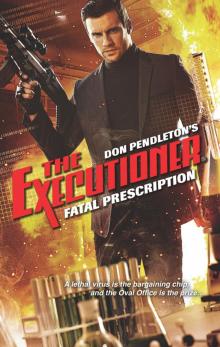 Fatal Prescription
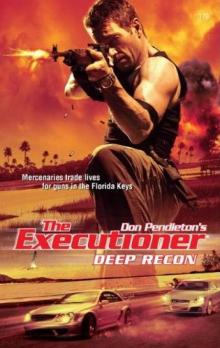 Deep Recon
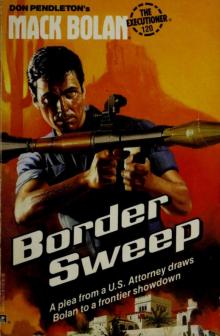 Border Sweep
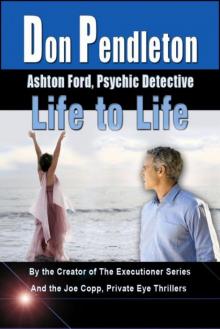 Life to Life
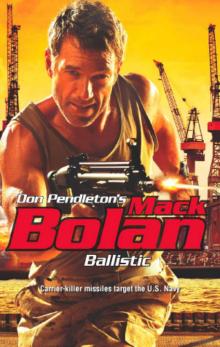 Ballistic
 Hellbinder
 Time to Time: Ashton Ford, Psychic Detective (Ashton Ford Series Book 6)
 The Violent Streets te-41
 The Libya Connection te-48
 Cartel Clash
 Whipsaw te-144
 Blood Rites
 Triangle of Terror
 Betrayed
 San Diego Siege
 Death Minus Zero
 Arctic Kill
 Mind to Mind: Ashton Ford, Psychic Detective
 Blood Heat Zero te-90
 Dead Man's Tale
 Sunscream te-85
 Ice Wolf
 Deadly Contact
 The Cartel Hit
 Tower of Terror at-1
 Conflict Zone
 Patriot Strike
 Point Blank
 Rogue Force
 Patriot Play
 Cold Judgment
 Contagion Option
 Sicilian Slaughter te-16
 Dragon Key
 Terminal Velocity
 Vegas Vendetta
 Ashes To Ashes
 Blood of the Lion
 Ballistic Force
 Desperate Cargo
 Detroit Deathwatch te-19
 Nightmare in New York
 Killpath
 Executioner 056 - Island Deathtrap
 Battle Cry
 Don Pendleton - Civil War II
 Copp In The Dark, A Joe Copp Thriller (Joe Copp Private Eye Series)
 China Crisis (Stony Man)
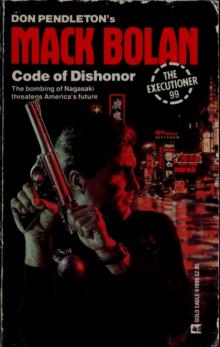 Code of Dishonor
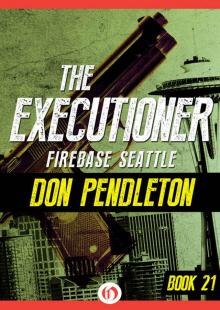 Firebase Seattle
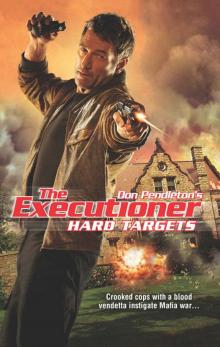 Hard Targets
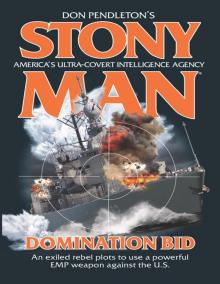 Domination Bid
 Kill Squad
 Slayground
 Poison Justice
 Suicide Highway
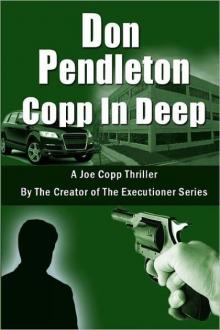 Copp In Deep, A Joe Copp Thriller (Joe Copp Private Eye Series)
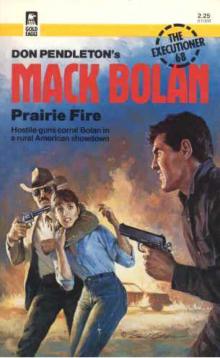 Prairie Fire
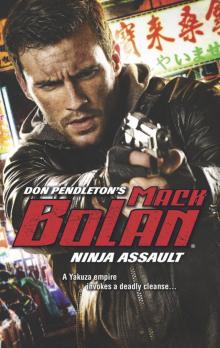 Ninja Assault
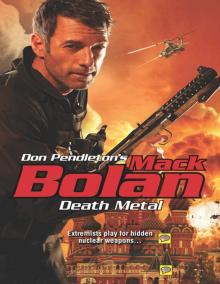 Death Metal
 Blood Run
 Doomsday Disciples te-49
 Breakout
 Caribbean Kill te-10
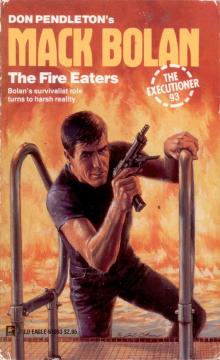 Fire Eaters
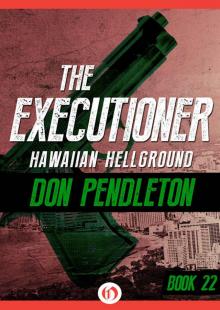 Hawaiian Hellground
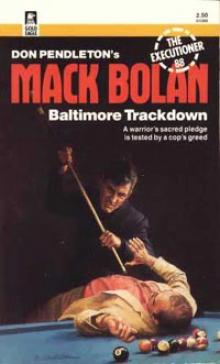 Baltimore Trackdown te-88
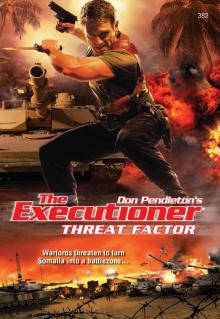 Threat Factor
 Don Pendleton's Science Fiction Collection, 3 Books Box Set, (The Guns of Terra 10; The Godmakers; The Olympians)
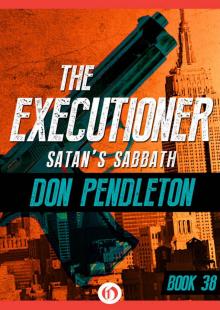 Satan’s Sabbath
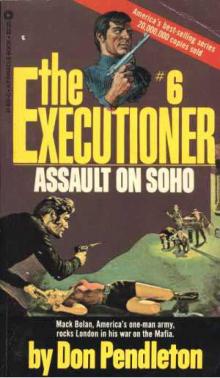 Assault on Soho te-6
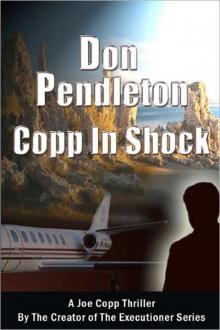 Copp In Shock, A Joe Copp Thriller (Joe Copp Private Eye Series)
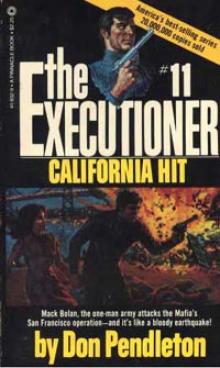 California Hit te-11
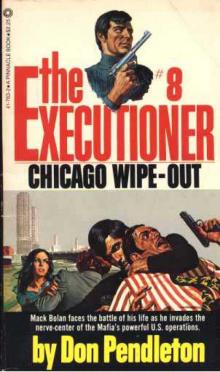 Chicago Wipe-Out te-8
 Copp For Hire, A Joe Copp Thriller (Joe Copp Private Eye Series)
 Point Position
 Friday’s Feast
 Exit Code
 Night's Reckoning
 New Orleans Knockout
 Washington I.O.U.
 California Hit
 Blood Vendetta
 Day of Mourning te-62
 Lethal Payload
 Boston Blitz
 Knockdown
 Blood Sport te-46
 Council of Kings te-79
 Terrorist Dispatch (Executioner)
 Silent Running
 Death Squad
 Deadly Salvage
 Oceans of Fire
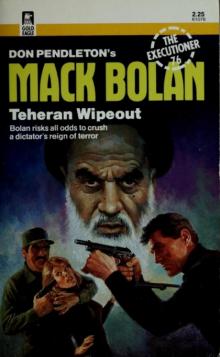 Teheran Wipeout
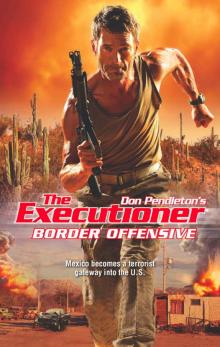 Border Offensive
 Devil's Horn
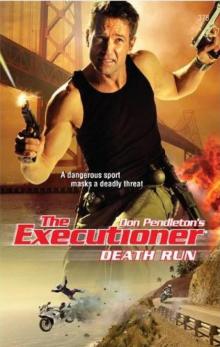 Death Run
 Continental Contract
 Savage Deadlock
 Eye to Eye: Ashton Ford, Psychic Detective
 Revolution Device
 Heart to Heart: Ashton Ford, Psychic Detective
 Apocalypse Ark
 Texas Storm
 Maximum Chaos
 Sensor Sweep
 Colorado Kill-Zone
 San Diego Siege te-14
 Tennessee Smash
 Desert Impact
 Fire in the Sky
 Wednesday’s Wrath
 Super Bolan - 001 - Stony Man Doctrine
 Chain Reaction
 Pacific Creed
 Death List
 Rebel Force
 Savannah Swingsaw te-74
 Heart to Heart
 Shadow Search
 Thermal Thursday
 Battle Mask te-3
 Rogue Assault
 Blind Justice
 Cold Fusion
 Nigeria Meltdown
 Backlash
 Moscow Massacre
 St. Louis Showdown
 Anvil of Hell
 Life to Life: Ashton Ford, Psychic Detective
 Amazon Impunity
 Run to Ground te-106
 Save the Children te-94
 Detroit Deathwatch
 Shadow Hunt
 Terror Ballot
 Stand Down
 Dixie Convoy
 Vendetta in Venice
 War Against the Mafia
 Assassin's Tripwire
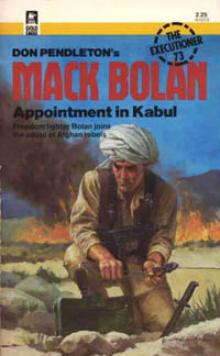 Appointment in Kabul te-73
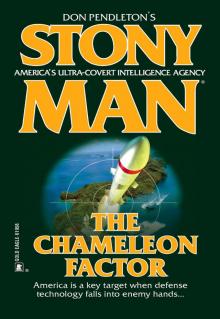 The Chameleon Factor
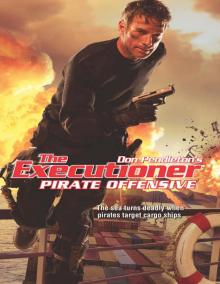 Pirate Offensive
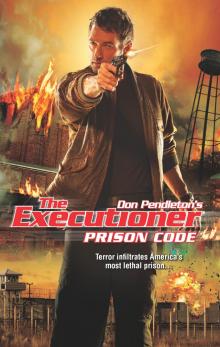 Prison Code
 Firebase Seattle te-21
 Ground Zero
 Assassin's Code
 Perilous Skies (Stony Man)
 Toxic Terrain
 Canadian Crisis
 Executioner 057 - Flesh Wounds
 Uncut Terror
 War Everlasting (Superbolan)
 Nuclear Reaction
 Capital Offensive (Stony Man)
 Beirut Payback te-67
 Monday’s Mob
 Blood Dues te-71
 Dead Easy
 Texas Showdown at-3
 Sold for Slaughter
 Orbiting Omega
 Copp On Ice, A Joe Copp Thriller (Joe Copp Private Eye Series)
 Rebel Blast
 Blowout
 Killing Trade
 Assault on Soho
 Season of Slaughter
 Collision Course
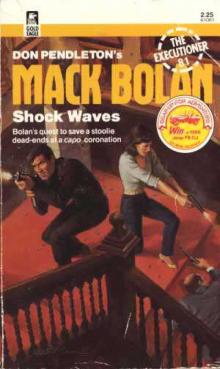 Shock Waves
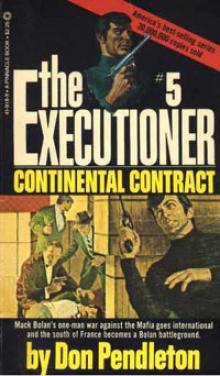 Continental Contract te-5
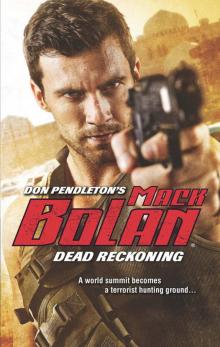 Dead Reckoning
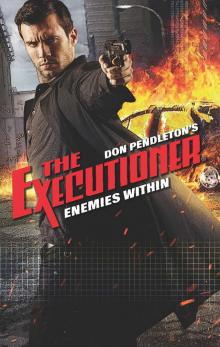 Enemies Within
 Agent of Peril
 Death Has a Name
 Vegas Vendetta te-9
 The Fiery Cross
 Cleveland Pipeline
 Armed Response
 Mercy Mission
 Tiger War te-61
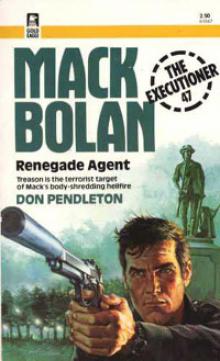 Renegade Agent te-47
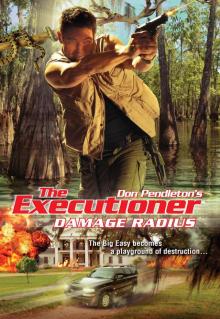 Damage Radius
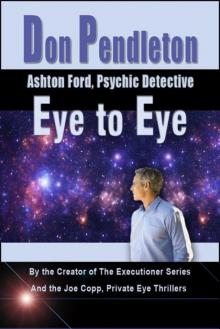 Eye to Eye
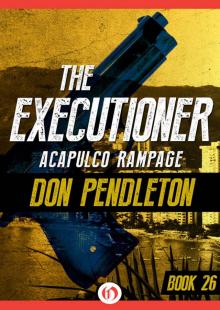 Acapulco Rampage
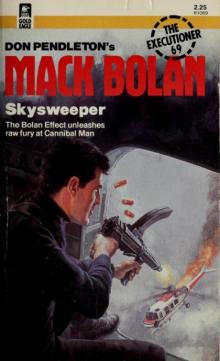 Skysweeper
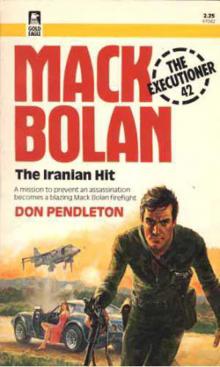 The Iranian Hit te-42
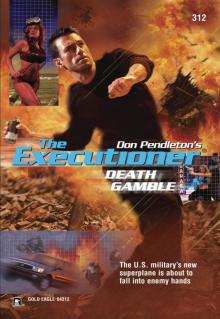 Death Gamble
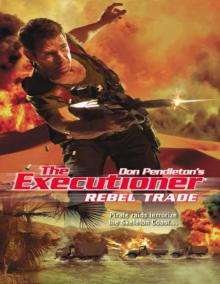 Rebel Trade
 Predator Paradise
 Battle Mask
 Pulse Point
 Missouri Deathwatch
 Blood Tide
 Missile Intercept
 Jersey Guns
 Hostile Force
 The Bone Yard te-75
 Twisted Path te-121
 Mind to Mind
 Copp On Fire, A Joe Copp Thriller (Joe Copp, Private Eye Series)