
- Home
- Don Pendleton
Killing Trade Page 12
Killing Trade Read online
Page 12
It annoyed Stevens no end to have to contemplate taking up arms himself. Theoretically he was not opposed to it, of course. He could hardly be North America’s preeminent arms designer if he suffered from an irrational fear of or disdain for weapons. He was not, however, a hands-on person. The dirty work was for those who did not, who simply could not, aspire to higher goals.
Still, there was self-preservation to consider.
Stevens had no trouble acknowledging his own brilliance. Recruited by Norris Labs straight out of college, he had always known he was destined for great things. He was a born engineer with a penchant for designing implements of destruction. He built his first primitive but potentially lethal catapult, albeit on a small scale, at the age of ten. By his teens, he was experimenting with rockets and homemade explosives. Before he graduated high school, he had used the equipment in the school’s auto shop to manufacture his first crude—and quite illegal—handgun. No one ever knew of that. He had that weapon to this day, locked in his safe with his more secret designs.
In college he had excelled in chemistry, physics and mechanical design, focusing all his projects on weapons theory and warfare. One of his professors, a man retired from Norris Labs himself, spotted Stevens’s talent early on. He watched the young student until he was sure, then contacted NLI. The company’s recruiters made Stevens an offer that seemed impossible to refuse, at the time. As he reflected on those early, eager days, his memories were bitter.
At first, it all seemed to be going as he’d hoped. He was Norris Labs’ prodigy, the favored son of NLI’s board of directors. Immediately after his arrival, he developed a streamlined manufacturing process that saved NLI millions of dollars per year in processing its conventional rifle ammunition on contract for the U.S. military. Stevens had followed that success by redesigning the specifications for the rifle rounds NLI was contracted to produce—specifications that were in turn adopted by the military as preferable to those they’d been using.
Those projects were nothing, however, compared to the secret “black bag” specifications to which Stevens was designing. He knew, from the beginning, that some of the materials he was asked to work with and some of the designs he was asked to provide, were minor or major violations of international treaties or domestic laws. Norris Labs was offered considerable leeway under license to the U.S. government, but there were limits. Stevens’s employers asked him to cross those lines. He did so gladly. The challenge, the inner drive he’d always had to create something better, more efficient, more powerful, something eminently more lethal, were all the motivation he needed. As he broke more and more laws, foreign and domestic, he grew to love new challenges. His employers goaded him on, always asking for more, always asking for better. He did not care why they were so cavalier with the law, why they courted so much danger.
Stevens, now an older man, knew only too well why any group of businessmen would break the law or traffic in war. There was money in it. Conventional arms were profitable, but cutting edge, ever more deadly and often illegal arms were obscenely profitable. As more and more fringe groups, banana republics, rogue nations and garden-variety terrorists and criminals cropped up, the markets for NLI’s less-than-legal munitions grew.
The company’s lawyers worked hard to keep it out of trouble, to establish for it the plausible deniability that kept such a juggernaut in business. The company’s security contractors worked just as hard assassinating anyone who threatened NLI’s empire. This included more than a few of Norris Labs’ own employees—not to mention their families—when leverage was needed and messages had to be sent. The price for endangering the company was clear enough. Most of those who’d sold their souls to the devil that was NLI knew that death was preferable to incurring the company’s displeasure.
Stevens toiled for years as a dutiful employee of NLI. Despite the company’s illicit activities, many of his designs were deemed too dangerous politically to see the light of day. He might not have minded that so much, despite the disappointment at seeing his worked shelved indefinitely, if there had been some compensation for his efforts. As the years rolled past, however, Stevens realized something. When it occurred to him, finally, it was far worse than any problem he’d previously considered. It was worse than a technical problem, worse than the threat of being caught helping to develop and manufacture illegal arms, worse than the moral implications of whatever violations he might have committed at home or internationally.
Donald Stevens was being taken for granted.
He had an ironclad contract, had signed countless nondisclosure agreements and was bound by simple fear of prison in many cases. He had no legal recourse. Norris Labs, as his employer, was legally entitled to any and all profit and outcome of his brilliance. His designs were NLI’s designs. His very thoughts belonged to them. Anything he even considered developing while working with NLI’s resources became the property of the company. He had even, in his foolishness, signed various non-compete agreements in his youth. For all intents and purposes, Norris Labs International owned Donald Stevens’s soul. The company was only too aware of what it possessed.
Stevens received a bonus each year, to be sure. His employers and the obsequious fools on the board were only too happy to invite him to their parties, bestow on him their meaningless awards, flatter him with their insincere thanks and pay lip service to his opinions. At the end of every day, however, Stevens was human capital, a resource to be used until it was no longer profitable. At that point, according to the terms of his contract, Stevens was legally obligated not to work in the arms-development field for a period of no less than five years. That was, as far as he was concerned, simply adding insult to injury.
Norris Labs took what he designed. It paid him far too little, in his opinion, to compensate him. While his processes and devices, from chemical-manufacturing methods to guidance systems for cruise missiles, earned the company billions worldwide, Stevens was lucky to see a six-figure salary. It galled him to be used in that way, to be treated by NLI as if the company were doing him a favor in shortchanging him. When his best work was sealed away in dark vaults, never to be seen again, when his would-be masters on the board told him he was not to pursue a particular line of development, it bothered him more each time. The last straw had been the depleted uranium small-arms ammunition.
It was such a simple concept, Stevens was amazed no one had invested in it before him. The battlefields of the day were the domain of depleted uranium rounds in heavy weaponry. Why not small arms, as well? In a day and age when fighters were increasingly armored at the individual level, why not develop the counteragent to that armor and do so preemptively? Stevens had also capitalized on the pyrophoric properties of the materials he was using, adding the accelerant tip to turn the rounds into truly explosive individual firebombs that were also amazing penetrators.
Then NLI had slammed the door in his face.
They treated him worse than they’d ever treated him before. They hadn’t just taken him for granted, they’d acted like he’d done something wrong. They had paid him for years to develop lethal armament. Then, overnight, they’d decided he’d gone too far. The rounds were a liability to the corporation, they said. There was too much backlash concerning depleted uranium rounds in heavy weaponry already, they complained. Turn the rounds smaller and make them man-portable and you’d unleash a firestorm of negative public sentiment, worse than the campaigns to ban land mines or the torture of enemy combatants, they whined. The company was already on the receiving end of investigations into its weapons trading overseas, they said, and Blackjack Group was becoming similarly high-profile in its war contracting. Norris Labs couldn’t afford the liability the DU rounds represented, they finally concluded. Hide the design, suppress the technology and make the whole thing go away, they ordered.
No more.
Stevens realized at that moment that he’d had enough. He was done being used. He was done toiling in relative poverty. It was time to take what he’d creat
ed and truly benefit from it. Along the way, he’d see to it that NLI paid for their arrogance, for their misuse of his genius.
Donald Stevens discovered that there was real money to be made in the arms market.
He’d started small, but not that small. He diverted to international buyers whole shipments of conventional arms, using Jonathan West’s computer skills to make it happen. West had, in fact, been integral to his plan. Stevens was an idea man, after all. He did what he did at the highest levels of thinking. It was West who had the practical know-how to put the plan into action. The two had worked together for long enough to become something approximating friends, which was rare for both of them. West was also young enough and money-hungry enough to jump at the chance Stevens offered. Theirs was purely a business relationship, but one that had worked. West had set up the practical side of the operation, helped him build their initial capital. Now he was dead.
Stevens sighed and picked up the handgun, racking the slide and engaging the frame safety. He had known, abstractly, just how dangerous to NLI was the production of DU ammunition. The paper trail led back to Norris Labs, after all. The initial proceeds from arms shipments to terrorist groups and rogue nations had ended up in an offshore account Stevens used to purchase equipment—and to purchase silence. He’d set up shop in Camden, buying the warehouse space, hiring security people, bribing local officials and getting his machinery up and running. He’d greased wheels with the local organized-crime groups. He’d spread around so much money, in fact, that West’s crude attempts to find markets for the DU ammunition had met with reasonable success, despite some missteps.
The scope of what he was doing to NLI had not truly occurred to him, however, until they started sending their Blackjack operatives to kill him.
West’s death was shocking enough, but the rampage of Blackjack mercenaries through New York City had shocked Stevens to his core. It was then that he realized just how dangerous his operation was to the company. If his link to NLI was discovered, the fact that he was acting on his own would not matter. He and NLI, and with them Blackjack Group, would be seen as a single enterprise, committing what were essentially war crimes on American soil. The public-relations nightmare would be matched only by the legal ramifications. Powerful men ran Norris Labs—and powerful men had few compunctions about who they silenced to keep that power. Stevens had not truly appreciated just how far such men would go. It was beyond murder. It was open war. Donald Stevens had declared war on NLI, and NLI had met his challenge with vicious, brutal zeal.
The real irony was that NLI had met Stevens’s tactics on the same terms. He had spread the depleted uranium ammunition they had tried to suppress and to hide. He had struck back at them, making vast sums of money in the process. So they had come for him, and they had done so with the same DU rounds. Blackjack had always believed in fighting fire with fire. Now, with the genie out of the bottle, they were going to lay waste to the entire landscape before sweeping all of the pieces under the rug. It made a sort of ruthless sense.
Stevens was not without his own resources, of course. The vast sums of money he’d made in the arms market allowed him the best in automated security and antipersonnel devices for the factory. He also had his own security people—contractors from a rival company whose owner had no love for Blackjack. Armed security guards stood their posts within and outside the Camden factory.
Stevens, perhaps because he was so comfortable with academics, with theory, had made what now seemed a prescient decision. He had paid his contractors not just for armed muscle, but for intelligence. Security contractors were only too eager to play CIA on someone else’s dollar, it seemed, and Stevens was happy to indulge them. Among the services provided for him by his contractors were surveillance and intelligence gathering locally. His men watched his assets and ran down any potential threats to his well-being. Stevens, in turn, threw money at them. Everybody was happy, and Stevens stayed reasonably safe. He had to admit to himself, however, that he had never really expected them to turn up anything.
He was, therefore, taken by surprise when one of his field men called to relay the bad news.
They’d called just that morning—the two men Stevens paid to monitor the Swedesboro house. He was proud of that house and what it represented, though West had helped him with the working details. Starting with the assumption that paper trails always led somewhere, they’d deliberately arranged for the trail to end at the address in Swedesboro—an unremarkable tract home in a sea of similar homes in an unremarkable development in New Jersey. From a nearby home, Stevens’s security men monitored the house day and night. If someone came knocking, they could follow up and ascertain to what extent those visiting had penetrated Stevens’s operation. They had done so now, not once, but twice.
The first time, men whom Stevens could only assume were law enforcement or government personnel had raided the house. They hadn’t stayed long—just poked around long enough to reassure themselves there was nothing there. This meant Stevens’s defenses were working as they should. Someone had investigated and found West but, thanks to West’s arrogance and Stevens’s cunning, they’d found only the younger man. Stevens was confident he remained in the shadows, undetected, free to continue his work.
That morning, however, the security men had called to say the house had been raided a second time. Stevens had immediately recognized the leader of the raid in the digital video e-mailed to him by his men. Percival Leister was the man behind Blackjack Group. Stevens had encountered him more than once at Norris Labs, even using his men to field-test various munitions and weapons. If Leister was attending to things personally, things were dire indeed. Stevens knew Leister preferred to remain the man behind the curtain, much as Stevens himself did.
Stevens’s men had earned their pay by following Leister. The Blackjack mercenaries had spent considerable time tearing apart the Swedesboro house, but eventually they’d left. Stevens’s men had tailed them quietly and found the location from which they were now working. Several teams were holed up in a motel just outside Swedesboro. If the reports Stevens had watched on television overnight were any indication, he’d lost countless men in the cross fires of what had to be gang wars and police intervention. It was possible that the men at the motel were all of Leister’s reserves. Stevens wondered how long it would be before NLI decided Leister and his people represented a link back to them. Who would they get to eliminate that threat?
Then again, given the rumors he’d heard and the things he’d actually seen, it was possible that NLI had every confidence in Blackjack Group’s discretion. Men who were so afraid for what might happen to friends, family and relatives that they would rather die than fail or be captured—that was the Blackjack way, as Stevens understood it—could hardly be expected to roll over on the employer.
It seemed likely that the market for Stevens’s product was played out in New York City. He would have to shift his focus until things calmed down in Manhattan. It would be some time before the criminal elements of New York could reassert themselves. That was all right. He could find buyers in other cities and in other states. He would have to adjust his pricing to take shipping into account, if he was to branch out farther. That, too, he could handle. But if Blackjack had gotten far enough in its investigation to find the house in Swedesboro, he had a decision to make.
Stevens had expected the authorities to find the house eventually. That was what it was there for. He knew that Blackjack employed private investigators and had government contacts of its own, but he had counted on the contractors being unable to dig as deeply as their government counterparts. If that was not the case, it was conceivable that Stevens and West had not buried their tracks deeply enough. If Blackjack could find the house in Swedesboro, Blackjack and the U.S. government could find the warehouse. West’s death introduced a further complication, for Stevens had no idea just how much evidence his late partner had left behind. It could not have been too much, as it had taken this long for the ene
my to come knocking on Stevens’s New Jersey door, but still…The risk was real and it was there.
Stevens was not about to take on the full power and might of the U.S. government, but then, he didn’t really have to. All he had to do was stay a step ahead of the authorities. It would be a terrible bother to move the Camden factory to another location, taking time and money to do it properly and with the needed secrecy. It could be done, however. He would take that step if it was absolutely necessary.
He had enough men to take on Leister’s people. At least, he thought he did. They would be dangerous and difficult to defeat, but he believed his own forces were equal to the task. He might not have another opportunity to face so depleted a force, if the report he’d been given was accurate as to numbers. To make the attack was to take a grave risk, however. He would have to commit most of his men to the act and pay them a handsome fee to convince them to undertake the project in the first place. If he lost them, he’d lose his security force and be helpless. Well, he had to admit, perhaps helpless wasn’t the word, given the other security measures he had taken. But he was not comfortable without a human component to guard his investments.
He was mulling over all of this when his phone rang again. Placing the pistol back on the desk in front of him, he put the receiver to his ear without saying anything.
“Stevens?” It was Taveras.
“Yes,” Stevens answered.
“I trust your operations continue?” he said. “You have had no problems?”
Taveras had never before inquired as to his welfare, and the drug lord did not strike Stevens as a humanitarian. The only explanation was that Taveras and his people needed more of what Stevens had so ably provided.
“I am well,” Stevens told him, “though I admit I have had my concerns. Are you calling to arrange another shipment?”
 Wild Card
 Warrior's Edge
 Blood Vortex
 Lethal Vengeance
 Killing Kings
 Cold Fury
 Righteous Fear
 Cyberthreat
 Stealth Assassin
 Critical Exposure
 Miami Massacre te-4
 Terrible Tuesday
 Dying Art
 Jungle Hunt
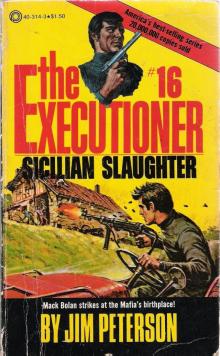 Sicilian Slaughter
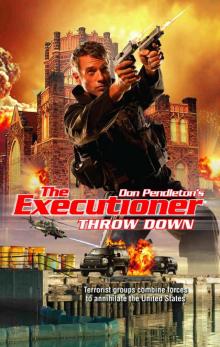 Throw Down
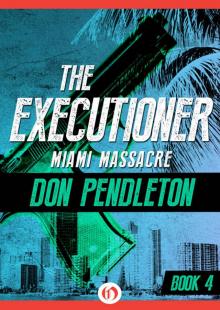 Miami Massacre
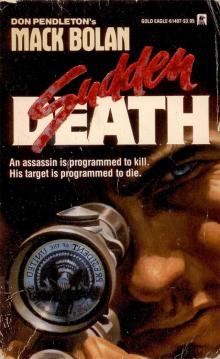 Sudden Death
 Panic in Philly
 Savage Fire
 Nightmare in New York te-7
 Omega Cult
 Sabotage
 Viral Siege
 War Tactic
 Thunder Down Under
 Haitian Hit
 The Hostaged Island at-2
 Fireburst
 The Killing Urge
 Assault
 Ashes To Ashes: Ashton Ford, Psychic Detective
 Flight 741
 Eternal Triangle
 Frontier Fury
 Meltdown te-97
 Chicago Wipeout
 Command Strike
 Nightmare Army
 Ivory Wave
 Combat Machines
 Silent Threat
 Resurrection Day
 Perilous Cargo
 Syrian Rescue
 Arizona Ambush te-31
 Siege
Siege Line of Honor
 Lethal Risk
 Blood Testament te-100
 Soviet Specter
 Arizona Ambush
 Fatal Prescription
 Deep Recon
 Border Sweep
 Life to Life
 Ballistic
 Hellbinder
 Time to Time: Ashton Ford, Psychic Detective (Ashton Ford Series Book 6)
 The Violent Streets te-41
 The Libya Connection te-48
 Cartel Clash
 Whipsaw te-144
 Blood Rites
 Triangle of Terror
 Betrayed
 San Diego Siege
 Death Minus Zero
 Arctic Kill
 Mind to Mind: Ashton Ford, Psychic Detective
 Blood Heat Zero te-90
 Dead Man's Tale
 Sunscream te-85
 Ice Wolf
 Deadly Contact
 The Cartel Hit
 Tower of Terror at-1
 Conflict Zone
 Patriot Strike
 Point Blank
 Rogue Force
 Patriot Play
 Cold Judgment
 Contagion Option
 Sicilian Slaughter te-16
 Dragon Key
 Terminal Velocity
 Vegas Vendetta
 Ashes To Ashes
 Blood of the Lion
 Ballistic Force
 Desperate Cargo
 Detroit Deathwatch te-19
 Nightmare in New York
 Killpath
 Executioner 056 - Island Deathtrap
 Battle Cry
 Don Pendleton - Civil War II
 Copp In The Dark, A Joe Copp Thriller (Joe Copp Private Eye Series)
 China Crisis (Stony Man)
 Code of Dishonor
 Firebase Seattle
 Hard Targets
 Domination Bid
 Kill Squad
 Slayground
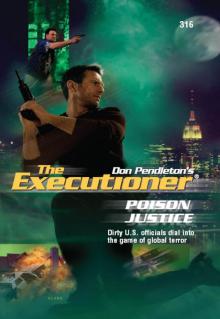 Poison Justice
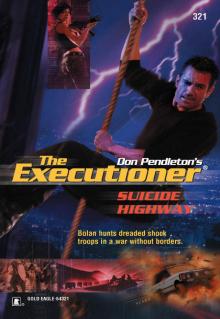 Suicide Highway
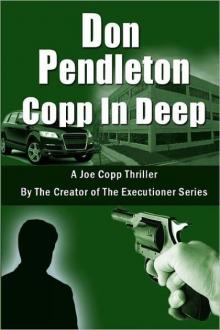 Copp In Deep, A Joe Copp Thriller (Joe Copp Private Eye Series)
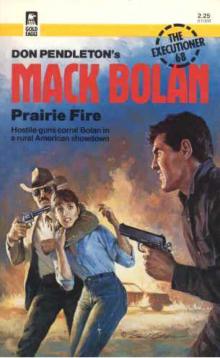 Prairie Fire
 Ninja Assault
 Death Metal
 Blood Run
 Doomsday Disciples te-49
 Breakout
 Caribbean Kill te-10
 Fire Eaters
 Hawaiian Hellground
 Baltimore Trackdown te-88
 Threat Factor
 Don Pendleton's Science Fiction Collection, 3 Books Box Set, (The Guns of Terra 10; The Godmakers; The Olympians)
 Satan’s Sabbath
 Assault on Soho te-6
 Copp In Shock, A Joe Copp Thriller (Joe Copp Private Eye Series)
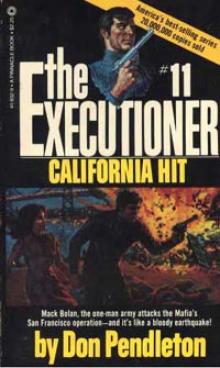 California Hit te-11
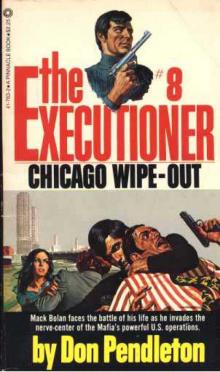 Chicago Wipe-Out te-8
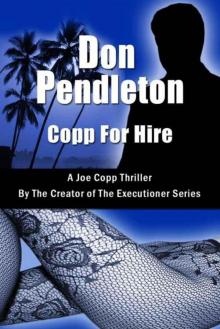 Copp For Hire, A Joe Copp Thriller (Joe Copp Private Eye Series)
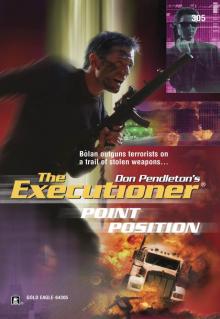 Point Position
 Friday’s Feast
 Exit Code
 Night's Reckoning
 New Orleans Knockout
 Washington I.O.U.
 California Hit
 Blood Vendetta
 Day of Mourning te-62
 Lethal Payload
 Boston Blitz
 Knockdown
 Blood Sport te-46
 Council of Kings te-79
 Terrorist Dispatch (Executioner)
 Silent Running
 Death Squad
 Deadly Salvage
 Oceans of Fire
 Teheran Wipeout
 Border Offensive
 Devil's Horn
 Death Run
 Continental Contract
 Savage Deadlock
 Eye to Eye: Ashton Ford, Psychic Detective
 Revolution Device
 Heart to Heart: Ashton Ford, Psychic Detective
 Apocalypse Ark
 Texas Storm
 Maximum Chaos
 Sensor Sweep
 Colorado Kill-Zone
 San Diego Siege te-14
 Tennessee Smash
 Desert Impact
 Fire in the Sky
 Wednesday’s Wrath
 Super Bolan - 001 - Stony Man Doctrine
 Chain Reaction
 Pacific Creed
 Death List
 Rebel Force
 Savannah Swingsaw te-74
 Heart to Heart
 Shadow Search
 Thermal Thursday
 Battle Mask te-3
 Rogue Assault
 Blind Justice
 Cold Fusion
 Nigeria Meltdown
 Backlash
 Moscow Massacre
 St. Louis Showdown
 Anvil of Hell
 Life to Life: Ashton Ford, Psychic Detective
 Amazon Impunity
 Run to Ground te-106
 Save the Children te-94
 Detroit Deathwatch
 Shadow Hunt
 Terror Ballot
 Stand Down
 Dixie Convoy
 Vendetta in Venice
 War Against the Mafia
 Assassin's Tripwire
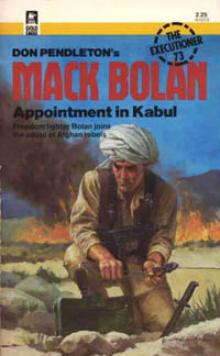 Appointment in Kabul te-73
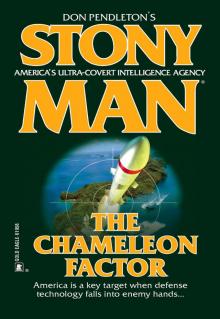 The Chameleon Factor
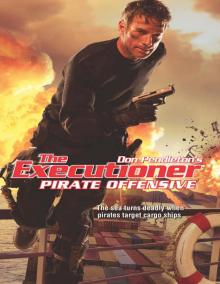 Pirate Offensive
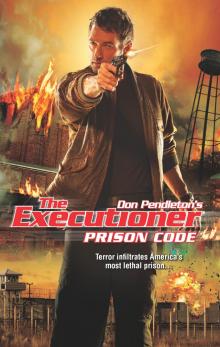 Prison Code
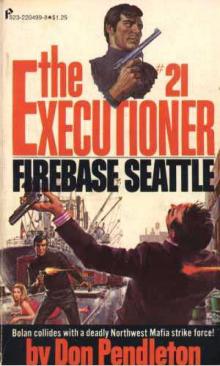 Firebase Seattle te-21
 Ground Zero
 Assassin's Code
 Perilous Skies (Stony Man)
 Toxic Terrain
 Canadian Crisis
 Executioner 057 - Flesh Wounds
 Uncut Terror
 War Everlasting (Superbolan)
 Nuclear Reaction
 Capital Offensive (Stony Man)
 Beirut Payback te-67
 Monday’s Mob
 Blood Dues te-71
 Dead Easy
 Texas Showdown at-3
 Sold for Slaughter
 Orbiting Omega
 Copp On Ice, A Joe Copp Thriller (Joe Copp Private Eye Series)
 Rebel Blast
 Blowout
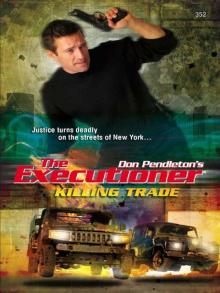 Killing Trade
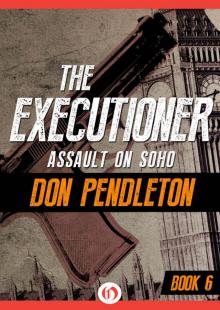 Assault on Soho
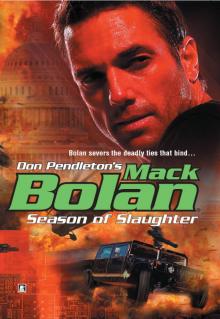 Season of Slaughter
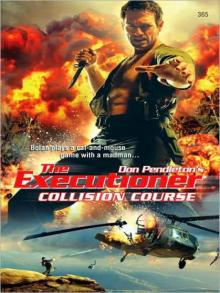 Collision Course
 Shock Waves
 Continental Contract te-5
 Dead Reckoning
 Enemies Within
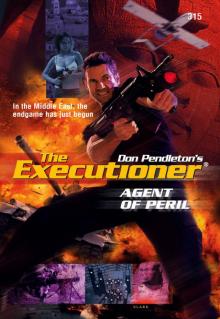 Agent of Peril
 Death Has a Name
 Vegas Vendetta te-9
 The Fiery Cross
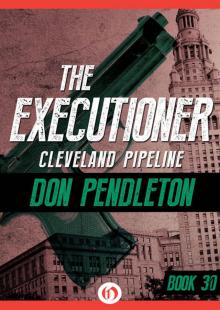 Cleveland Pipeline
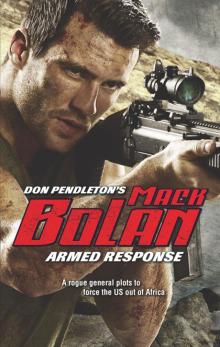 Armed Response
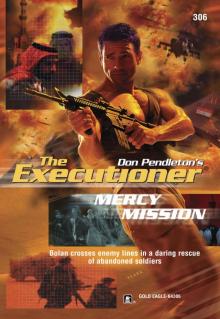 Mercy Mission
 Tiger War te-61
 Renegade Agent te-47
 Damage Radius
 Eye to Eye
 Acapulco Rampage
 Skysweeper
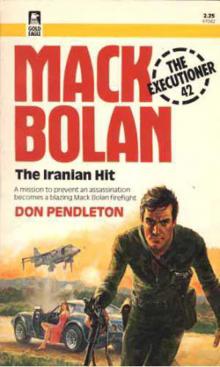 The Iranian Hit te-42
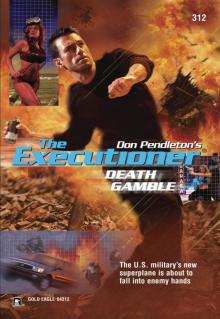 Death Gamble
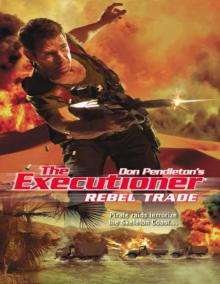 Rebel Trade
 Predator Paradise
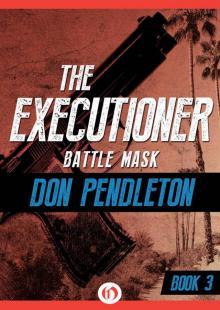 Battle Mask
 Pulse Point
 Missouri Deathwatch
 Blood Tide
 Missile Intercept
 Jersey Guns
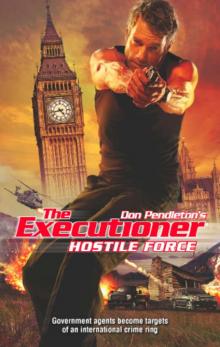 Hostile Force
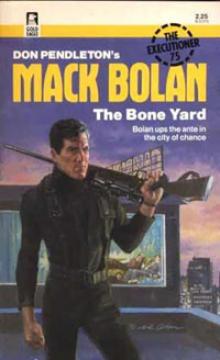 The Bone Yard te-75
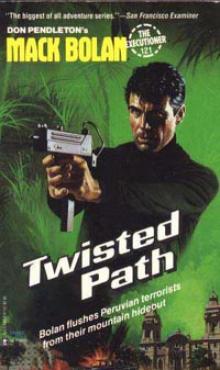 Twisted Path te-121
 Mind to Mind
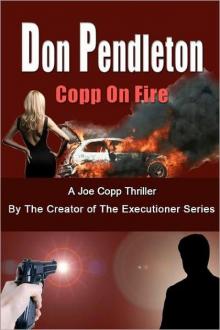 Copp On Fire, A Joe Copp Thriller (Joe Copp, Private Eye Series)